Some links in this guide may be affiliate links. If you book through one, we may earn a commission at no extra cost to you. How that works
Hotel cards, lobby signs and clinic charts use precise terms like non-potable, boil-water advisory and travelers’ diarrhea. Here is what each one means and the action it calls for.
A card on the hotel nightstand says the tap water is non-potable. A lobby sign announces a boil-water notice. At a clinic abroad, a doctor writes travelers’ diarrhea on the chart. Each phrase carries its own instructions, and mixing them up is how a trip goes sideways. This glossary explains what the terms mean and what each one asks you to do.
Why the Exact Wording of a Water Notice Matters
Water warnings are not interchangeable. One notice may tell you to boil tap water before any use. Another may say the water is fine for bathing but not for drinking. Public health agencies use precise terms because each calls for a different response, and hotels, cruise lines and rental hosts usually pass the official language along unchanged. Read the whole notice before deciding what to give up: drinking, ice, brushing your teeth, or all three.
Potable, Non-Potable and Treated Water
Potable water is safe to drink. When a water system or hotel labels its supply potable, the tap is treated as safe for drinking and for brushing your teeth.
Non-potable water should not be drunk. Signs often allow other uses, but where tap water may be contaminated the advice is to avoid swallowing water in the shower and to brush your teeth with bottled or disinfected water instead.
Disinfected water is tap water made safe by boiling, filtering or chemically treating it. If bottled water is unavailable where you are, treating water yourself is the fallback.
Factory-sealed describes a bottle or can that left the manufacturer unopened. Drinks and foods in factory-sealed containers are usually safe, provided no one has opened or handled them since.
Boil-Water Advisories and What They Ask You to Do
Boil-water advisory, sometimes called a boil-water notice, is a public statement that water in the distribution system may be unsafe or could pose an acute health risk. Customers are told not to drink the water without boiling it first, following the provider’s directions. Systems must issue the notice as soon as possible, and some state rules set a deadline of 24 hours after the condition occurs.
E. coli in water samples is a common trigger. A system that finds E. coli in required repeat samples typically has to notify the public.
Turbidity is cloudiness in finished water. High turbidity points to a severe failure in filtration and possibly other treatment at the plant, another trigger for an advisory.
A notice is lifted once the system corrects the condition or determines the water poses no acute health risk, often confirmed by negative samples on testing. Until that announcement, treat the notice as active.
Travel tip
While an advisory is in effect, switch to sealed bottled water for anything that goes in your mouth or touches food: drinks, ice cubes, rinsing produce, and toothbrushing. If no bottled water is available, boil or disinfect what you have.
Traveler’s Diarrhea: What It Is and When It Needs a Doctor
Of all the illnesses travelers pick up abroad, diarrhea is the one you can count on most. Between 30 and 70 percent of travelers get it within a two-week window, with the odds depending on where and when they go. The riskiest places sit in Asia, with Japan and South Korea as the exceptions, and also include the Middle East, Africa, Mexico, and Central and South America.
Traveler’s diarrhea can come from a variety of intestinal pathogens. Bacteria are thought to cause at least 75 to 90 percent of cases, viruses at least 10 to 25 percent and are more often linked to vomiting, and protozoa such as Giardia roughly 10 percent, mostly in longer-term travelers.
Mild diarrhea is tolerable, not distressing, and does not interfere with planned activities.
Moderate diarrhea is distressing or interferes with planned activities.
Severe diarrhea is incapacitating or completely prevents planned activities.
Dysentery is the passage of grossly bloody stools, and any bloody diarrhea counts as severe under the current severity scale.
Persistent diarrhea lasts two weeks or longer. Doctors may order stool tests to identify the organism and choose an effective antibiotic, particularly when serious symptoms set in just after the trip ends.
Oral rehydration solution replaces fluids in serious cases and is sold online and at pharmacies in many developing countries.
Loperamide is an over-the-counter drug that reduces the frequency and urgency of bathroom trips. It can make a bus or plane ride manageable while other treatment takes effect.
Bismuth subsalicylate has good evidence as a preventive measure, studied in four divided daily doses of either 2.1 or 4.2 grams, taken with meals and at bedtime.
Antibiotics are the exception rather than the rule. Travelers who carry a prescribed antibiotic for self-treatment should save it for severe cases and take it exactly as directed, and anyone running short mid-trip can find the refill steps in Run Out of Medication Abroad? How to Get a Refill. If you do get sick, Sick Abroad? What to Do and When lays out when the pharmacy counter is enough and when a clinic is the right stop.
Ice, Bottled Water and Sealed-Container Labels
In destinations with limited access to clean water, skip the ice and flavored ice pops, since the ice was likely made with tap water.
Carbonated drinks in sealed bottles or cans, such as sodas or sparkling water, are safer than tap water, and fizzy versions are ranked safer still. Hot coffee and tea make the safer list too, as do pasteurized dairy products and hard-cooked eggs.
One caution applies to bottled water itself. Vendors in some countries refill branded bottles with untreated water, and a dot of glue can imitate a factory seal. Check that the cap and seal look genuine before you buy.
Food Safety Terms on Menus, Markets and Street Vendors
Danger zone is the temperature range between 40 and 140 degrees Fahrenheit, where germs that cause food poisoning grow quickly. At a buffet or salad bar, hot food should be steaming and cold food chilled.
Cooked and served hot is the standard to look for. Food held at room temperature lands on the avoid list, as do raw or undercooked meat and fish and raw or runny eggs.
Peeled fruit is the safer form of raw produce: wash it in clean water or peel it yourself. Cut-up fruit, fresh salads and unwashed produce are not worth the risk, because contamination can survive even clean water.
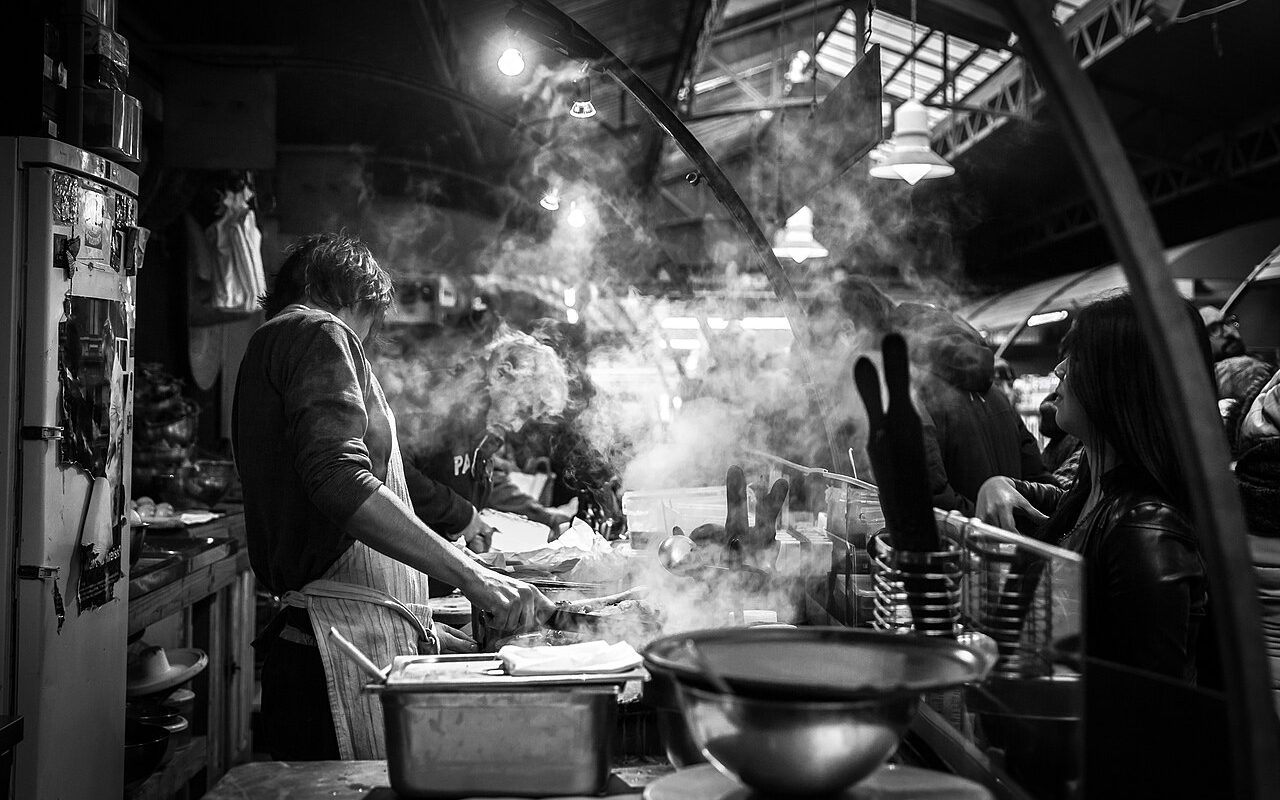
Street food gets a cautious recommendation at best. If you eat it, apply the same rules: nothing raw, and the food cooked and steaming hot.
Bushmeat, meaning monkeys, bats or other wild game, belongs on the never list, as do fountain drinks and unpasteurized dairy products.
Heads up
Never taste food to determine whether it is safe. When in doubt, throw it out, at markets, buffets and anywhere else you cannot verify how the food was handled.
Brushing Your Teeth, Showering and Swimming
Shower precautions matter where tap water may be contaminated: keep your mouth closed in the shower, then brush your teeth with bottled or disinfected water.
Recreational water has its own rules. Do not defecate in any body of water, stay out of floodwater and other contaminated water bodies, and wash with soap and safe water after any contact with floodwater. When soap and water are unavailable, an alcohol-based hand sanitizer with at least 60 percent alcohol is the substitute; the percentage is printed on the label.
How to Check Conditions Before You Go
The terms above are easiest to learn before departure. A visit with your doctor or a travel medicine clinician ahead of the trip is the natural moment to ask which stops on your route carry dirty-water risks and what to pack. The State Department’s country advisories flag health risks alongside security ones, and we explain how to read them in State Department Travel Advisories and STEP: How to Read Them and Use Them.
Before you leave, check what your health coverage does and does not do abroad. Travel Insurance Basics: What It Covers, What It Doesn’t and When to Buy walks through the options, including policies that handle medical care overseas. Pack the practical items too: hand sanitizer, oral rehydration solution for high-risk trips, and enough of any regular medication for the whole trip plus a cushion for delays.
Once you arrive, the wording on that nightstand card or lobby sign tells you what to do. The terms above are the translation.
Before you go
- Travelers’ diarrhea affects 30 to 70 percent of travelers during a two-week trip, depending on destination and season.
- A boil-water advisory means do not drink the tap water without boiling it first; use bottled water for drinking, brushing teeth and making ice until the notice is lifted.
- Carbonated drinks in factory-sealed bottles or cans are safer than tap water, but check the seal, since glue can mimic a factory seal.
- Mild cases of diarrhea often need only fluids; severe cases, bloody stools or symptoms lasting two weeks or longer warrant medical care.
- When soap and safe water are unavailable, use an alcohol-based hand sanitizer containing at least 60 percent alcohol.
Travelers also ask
Q: Is it safe to drink the tap water at my hotel?
A: It depends on the destination and the property, so look for notices and ask the front desk. In destinations with limited access to clean water, including much of Asia outside Japan and South Korea, the Middle East, Africa, Mexico, and Central and South America, stick to bottled or otherwise treated water.
Q: What should I do during a boil-water advisory?
A: Do not drink the water without boiling it first, following the directions from the water provider. Rely on bottled water for everything from drinking and food prep to ice cubes and toothbrushing until the advisory is lifted.
Q: When does travelers’ diarrhea need a doctor?
A: Get medical care if diarrhea leaves you unable to function or your stools are bloody, and ask for stool tests if bad symptoms flare up right after you get home. Symptoms lasting two weeks or longer also deserve a medical evaluation.
Q: Are bottled drinks always safe abroad?
A: Drinks from unopened, factory-sealed bottles or cans are safer than tap water, and carbonated ones are safer still. Check the cap and seal, because vendors in some countries refill bottles with untreated water and a drop of glue can mimic a factory seal.
Fees, processing times and agency rules change, and airline and hotel policies vary. This guide is general information for travelers in the U.S.; confirm the current rules with the agency, airline or hotel before you travel.