Some links in this guide may be affiliate links. If you book through one, we may earn a commission at no extra cost to you. How that works
Recirculated cabin air gets the blame, but the documented risks in flight come from the row around you and a body that has sat still for hours. Here is what the studies actually show, with numbers.
Few travel fears are as stubborn as the idea that airplane air is a shared germ cloud. The logic seems sound: strangers sit in a sealed tube for hours, breathing air that has moved past every row. The research record tells a more specific story. Up to half of travelers report a health problem related to overseas travel and about 5% need medical attention for one, and the documented causes are usually proximity and immobility rather than the ventilation system.
Myth: Cabins Just Recirculate Stale Air the Whole Flight
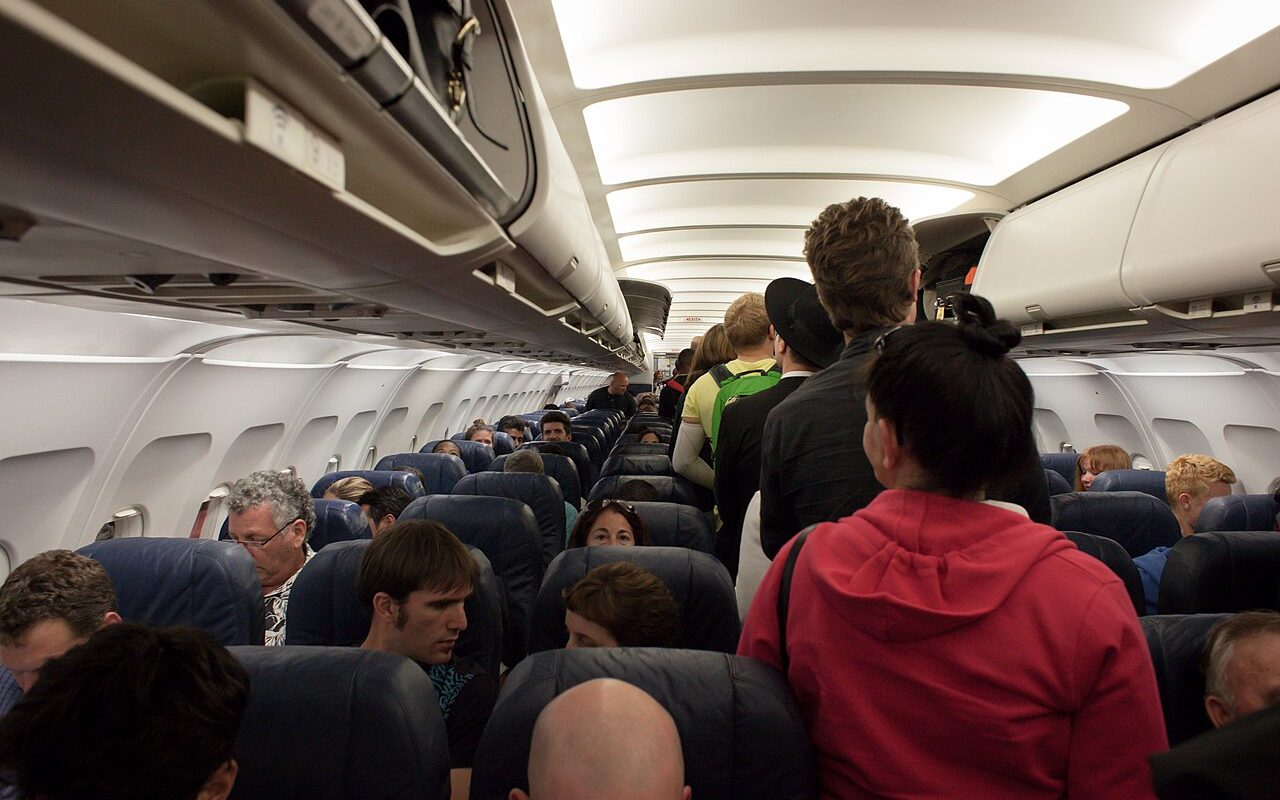
The folklore version goes like this: airlines save money by pumping the same air around the cabin over and over, so every cough eventually reaches every passenger. Commercial jets do recirculate a share of cabin air, and about 50% recirculation has been the standard configuration. The remainder is drawn from outside, and studies of ventilation systems and patient outcomes indicate that the spread of pathogens during flight occurs rarely.
A review of cabin environment research published since 2000 found no reports of significant air quality problems in cabins, though passengers and crew have complained of some health-related issues. Low humidity drew the most complaints, and the review noted that the overhead gasper nozzles passengers aim at their faces adjust comfort but do not improve air quality at the seat.
Gaps remain. A 2001 National Research Council report recommended additional research on cabin air and health effects, and a 2004 Government Accountability Office report concluded that more was still needed on how air quality affects the people breathing it. Dryness, not staleness, is the documented comfort problem.
Fact: Infection Risk Tracks With Who Sits Near Whom
When respiratory infections do spread in flight, the established routes are droplet spread and the airborne route. Researchers have long believed the main risk from most respiratory diseases is limited to within two rows of an infectious passenger. NIOSH, the National Institute for Occupational Safety and Health, tested that belief with tracer gas released at breathing level in a full-scale, 11-row mock-up of a wide-body cabin, with heated mannequins simulating seated passengers. The airflow pattern shaped everything: concentrations at the same distance but in different directions were not necessarily the same, and some seats measured higher than the seat of the source itself because of the air distribution pattern and the cabin walls.
Documented outbreaks agree. After a 10-hour flight from London to Hanoi in March 2020, investigators traced 217 passengers and crew; 16 were found to have SARS-CoV-2, and 12 of those 16, or 75%, sat in business class alongside the only symptomatic person, an attack rate of 62% in that cabin. Seating proximity was strongly associated with infection risk, with a risk ratio of 7.3, and the investigators found no strong evidence for alternative transmission scenarios. Flight duration matters too, which is why the team said prevention guidance should account for how long passengers are exposed.
Travel tip
Distance from a visibly ill passenger has far more support in the research than any wiping routine. If the person beside you is coughing through boarding, asking the crew about an open seat is a reasonable step.
Myth: Tray Tables and Seat Pockets Are the Dirtiest Threat Onboard
Swab studies of tray tables make alarming headlines, but published research on in-flight transmission does not single out surfaces as the main route. Relatively large droplets settle out of the air quickly and require close-range contact to infect someone, and airborne spread has been documented rarely. In the well-investigated clusters, what infected passengers shared was a seat near an infectious person on a long flight. None of this means surfaces are sterile. It means distance and duration are the factors that actually predict who gets sick, so where you sit and for how long deserve more attention than what you touch.
Myth: Dry Cabin Air Dehydrates Everyone and Triggers Blood Clots
Low humidity is a genuine, documented complaint among passengers and crew. Dehydration from alcohol, tea and coffee has also been proposed as a factor in clot formation during flights. But studies of the mechanisms behind travel-related clots have not produced consistent results, and venous stasis, meaning blood pooling because the legs are still, appears to play the major role. Prolonged, cramped sitting interferes with venous flow, and seat-edge pressure behind the knees can aggravate that stasis and contribute to vessel wall damage. The dry air is uncomfortable; the stillness is what raises the risk.
Fact: Flight-Related Clots Are Rare but Well Documented
The connection was first described in 1954, in a report of deep vein thrombosis in a doctor after a 14-hour flight, and the nickname “economy class syndrome” followed. The numbers put the risk in perspective:
| Study finding | Figure |
|---|---|
| Annual incidence of venous thromboembolism in the general population | 0.1% |
| Absolute risk of VTE on flights longer than 4 hours, in one study | 1 in 4,656 person-flights |
| Symptomatic DVT incidence across studies of air travelers | 0% to 0.28% |
A systematic review that screened 254 studies found no definitive evidence that travel lasting more than 3 hours increases DVT risk overall, but it did find evidence that flights of 8 hours or more raise the risk when additional risk factors exist. Having had a previous blood clot is one condition that increases your chances. The prevention steps are concrete: exercise your calf muscles and stretch your legs while seated, get up and walk when you can, and talk to your doctor about compression stockings or medicine before departure if you have additional risk factors. Taking aspirin to prevent blood clots during travel is not recommended.
Fact: Ear Pain Comes From Pressure Changes, Not Germs
During normal flight conditions, the FAA requires that cabins be pressurized, and the pressure and humidity in the cabin change as the aircraft climbs and descends. That pressure change is what makes ears ache around takeoff and landing.
For travelers with chronic conditions, the stakes go beyond ear discomfort, because changes in air pressure and humidity can worsen underlying medical problems. The Aerospace Medical Association recommends getting chronic conditions evaluated and stabilized before a trip, especially for people with heart disease, diabetes, lung disease, psychiatric conditions, seizure disorders, a past stroke, recent operations, or a previous clot in a deep vein or the lungs.
Travelers who need in-flight oxygen face specific rules. Federal rules do not allow passengers to carry their own oxygen onto the aircraft, so you must notify the airline at least 72 hours before departure if you require it. Some airlines do not offer in-flight oxygen on every aircraft or flight, and some permit only FAA-approved portable oxygen concentrators. You must also arrange your own oxygen for the ground portions of the trip, at departure, during layovers and on arrival.
Habits the Evidence Actually Supports
Most of the useful advice fits in a short list:
- Get a pre-travel check if you have a chronic condition, and be current on routine vaccinations and any destination-specific vaccines.
- On flights of 4 hours or more, keep your legs moving: calf exercises and stretches while seated, and walks when the seatbelt sign is off.
- Ask your doctor about compression stockings if you have additional clot risk factors, and skip aspirin as a clot-prevention measure.
- Pack enough medication for the trip plus delays. Run Out of Medication Abroad? How to Get a Refill covers what to do if you come up short anyway.
And have a plan for the illness that does occasionally happen in transit. Some travel medical plans include 24-hour support lines and lists of vetted local providers, which matters most in the first hours of a problem. Travel Insurance Basics: What It Covers, What It Doesn’t and When to Buy explains what a policy should include before you need it.
Before you go
- Commercial cabins recirculate about 50% of their air, and studies of ventilation systems and patient outcomes indicate that the spread of pathogens during flight occurs rarely.
- In documented outbreaks, seating near an infectious passenger predicted infection; on one 10-hour flight, 12 of 16 infected people sat in business class with the only symptomatic person.
- Flight-related blood clots are rare: one study found an absolute risk of 1 in 4,656 person-flights longer than 4 hours, and risk rises on flights of 8 hours or more when other factors exist.
- Moving your legs, calf exercises while seated and doctor-advised compression stockings have evidence behind them; taking aspirin to prevent travel clots is not recommended.
- Ear pain during climb and descent comes from cabin pressure changes, which can also worsen chronic conditions, so the Aerospace Medical Association advises a pre-travel check.
Travelers also ask
Q: Does recirculated airplane air spread germs through the whole cabin?
A: Commercial jets recirculate about 50% of their cabin air, and studies of ventilation systems and patient outcomes indicate that the spread of pathogens during flight occurs rarely. Documented transmission clusters have centered on passengers seated near someone infectious, not on the vents.
Q: How common are blood clots from long flights?
A: They are rare. One study reported an absolute risk of 1 in 4,656 person-flights for trips longer than 4 hours, and research suggests risk rises on flights of 8 hours or more when additional risk factors exist.
Q: Why do my ears hurt when I fly?
A: The FAA requires pressurized cabins, and the pressure changes during climb and descent are what cause ear discomfort. Those same pressure and humidity changes can worsen chronic medical conditions, so travelers with heart or lung disease should discuss the trip with a provider first.
Q: Should I take aspirin before a long flight to prevent clots?
A: No, taking aspirin to prevent blood clots during travel is not recommended. Exercise your calves, walk when you can, and talk to your doctor about compression stockings or medicine if you have additional risk factors.
Fees, processing times and agency rules change, and airline and hotel policies vary. This guide is general information for travelers in the U.S.; confirm the current rules with the agency, airline or hotel before you travel.