Some links in this guide may be affiliate links. If you book through one, we may earn a commission at no extra cost to you. How that works
Cruise pricing has its own vocabulary. This glossary explains the terms on your quote or booking confirmation and what each one does to what you actually pay.
A cruise quote packs more pricing jargon onto one page than a plane ticket or a hotel reservation. Most of it is harmless shorthand, but a few terms, guarantee stateroom, nonrefundable deposit, automatic gratuities, describe rules that can move your final bill by hundreds of dollars. Here is what each one means before you hand over a deposit.
What the Advertised Fare Includes, and What It Leaves Out
Cruise fare. The base price of your cabin and the sailing, quoted per person on the assumption that two people share the cabin. It covers your accommodations, meals in the main dining rooms and buffet, and most entertainment; drinks, Wi-Fi, specialty restaurants and shore excursions are priced separately under the a la carte model most mainstream lines use.
The headline number is not the total. Taxes, fees and gratuities are added at booking or posted to your onboard account, and realistic planning numbers put a week on a mainstream ship at $1,000 to $4,000 per person for the fare alone, with another $500 to $1,500 added once drinks, Wi-Fi and excursions are in. One planning rule from industry breakdowns: figure your true cost will land 40 to 60 percent above the advertised fare.
Cabin and Rate Terms
Guarantee stateroom. A discounted booking in which the cruise line assigns your cabin number later, generally around the time tickets are issued, roughly four weeks before departure. You are guaranteed at least the category you booked or better, but you cannot request a location, bed configuration or specific facilities, and cabins booked for your travel group are not guaranteed to sit near each other.
Category. The code that identifies a cabin type, such as interior, oceanview or balcony. If your booked category is full, a guarantee booking can land you an empty cabin in a higher one at no extra cost, which is part of the appeal; on some lines, though, the guarantee rate carries no real discount, so the upgrade is the only possible win.
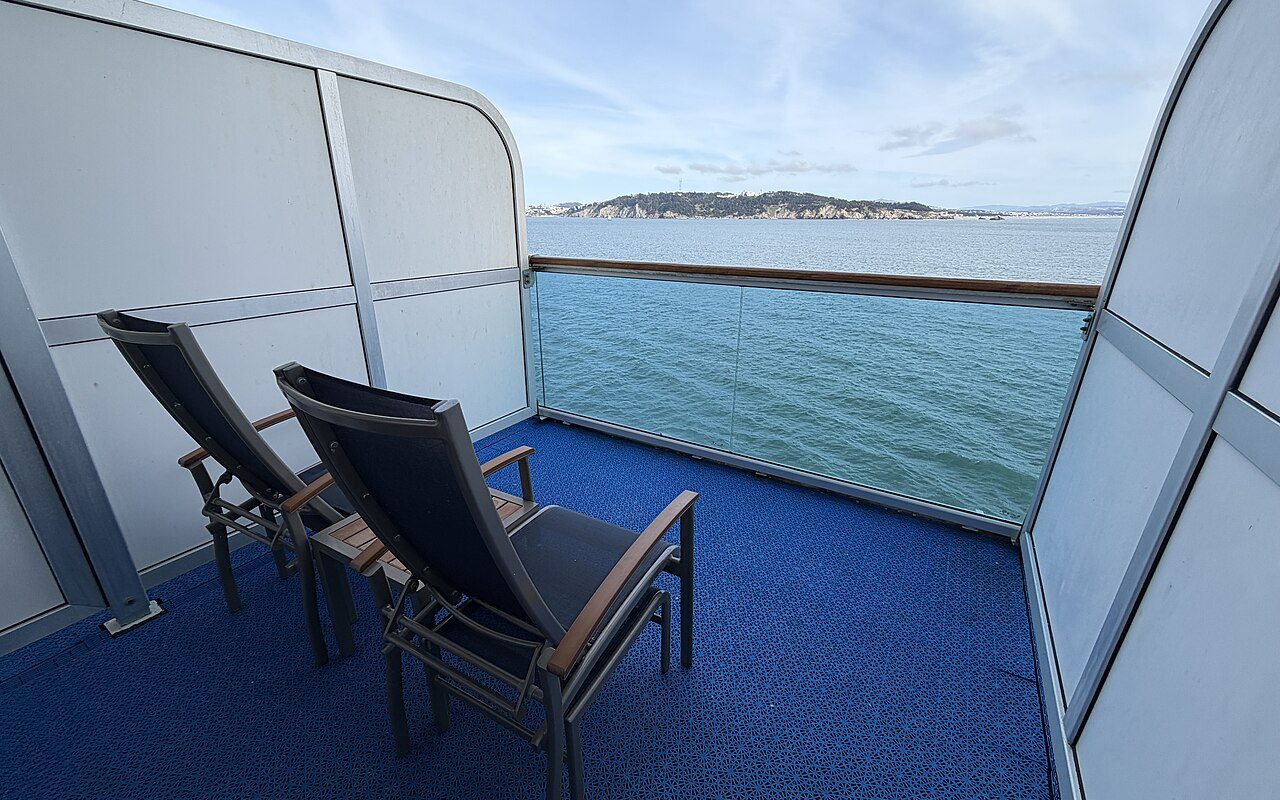
Obstructed view. An oceanview or balcony cabin whose sightline is partly blocked, usually by lifeboats or deck structures above. The degree of blockage varies by ship and deck, so ask what specifically sits outside the window before paying for a view category.
Deposit, Payment Schedule and Fare Terms
Deposit. The payment due at booking to hold the cabin. Princess Cruises lists deposit amounts that typically range from $100 to $500 depending on cruise length and type.
Nonrefundable deposit. A deposit that does not come back if you cancel. Princess switched its default to nonrefundable deposits for new bookings from October 15, 2025, which brings it in line with Royal Caribbean, Celebrity and Carnival; refundable deposits remain available through certain promotions or for an added fee.
Refundable deposit. The traditional arrangement, refundable until the final payment due date. Confirm which type you are buying before you pay, because the booking system’s default may not be the one you want.
Final payment date. The deadline the line sets, after which cancellation penalties apply to the full fare. Bookings made inside that period require payment in full at the time of reservation, with standard cancellation fees from that moment.
Future Cruise Deposit. Princess’s program that lets you put $100 per person toward a sailing you have not chosen yet. If you have not picked a cruise within a year, the money comes back, and the program adds as much as $150 in onboard credit to the sailing you eventually choose.
Lines also sell fares on a capacity controlled basis, meaning a limited number of cabins sell at that price and the offer can be withdrawn at any time, with the line reserving the right to correct pricing errors and change fares and surcharges without notice. The price is not locked until the booking is made.
Onboard Account and Spending Terms
Onboard account. The running tab for everything you buy on the ship, settled at the end of the sailing. You receive a final statement before you leave the ship showing all charges.
Cruise card. The scannable card, or its app equivalent, that identifies you for every charge. At some ports it also records who steps off the ship, which is how per-passenger shore fees end up on onboard accounts.
Automatic gratuities. The daily per-person service charge that pays the crew, added to your account unless you prepay. Mainstream lines run roughly $14 to $18 per person per day, and suite occupants pay the higher end of that scale; Royal Caribbean sets its daily charge at $18.50 for standard cabins and $21 for Grand Suites and up, which works out to roughly $130 to $147 per person across seven nights. Some lines let you remove or adjust the charge and others do not, so check the specific line’s policy rather than assuming.
Prepaid gratuities. Paying the service charge at booking instead of letting it post daily. Prepaying locks the rate against increases and keeps the amount off your end-of-cruise bill.
Beverage package. An unlimited drinks bundle, typically $50 to $110 per person per day, with many lines requiring both occupants of a cabin to buy it. Run the math first: a $70-per-day package only pays off if you order somewhere around six to eight drinks each day, so a light drinker usually does better paying per drink.
Travel tip
If you plan to accept the automatic gratuity, prepay it when you book. Lines raise these charges often, and prepaying fixes the rate and shrinks the folio that arrives on the last morning.
Card holds and the way charges post to your card during a trip work much like they do at hotels; our travel money terms glossary covers that side of the bill.
Itinerary Terms
Boarding. Getting on the ship at the start of the sailing, at the home port where the cruise begins and ends. That home port matters for costs too: rising Australian port fees prompted Princess to drop Melbourne as a home port for its 2025-26 season.
Tender port. A stop where the ship anchors offshore and small boats ferry passengers to land because the pier cannot take the ship.
Sea day. A day with no port call. It is also the day most likely to involve the ship’s medical facilities, and our guide on whether there are doctors on cruise ships explains what onboard care generally includes.
Change and Cancellation Terms That Differ From Airline Tickets
Cancellation penalty schedule. The tiered fees a line charges as the sailing date approaches, reaching the fullest penalties closest to departure. The schedule lives in the fare terms rather than on the price tag, and it differs by fare tier, so read it before choosing the cheapest rate.
Cruise bookings do not carry the automatic cash refund protections that federal rules give airline tickets; our airline refund rights guide explains when those apply in the air. On the water, what happens when you cancel depends on the line’s contract of carriage and the fare you bought. When the line cancels the sailing rather than the other way around, cash refunds are typically owed, and our guide to getting a cash refund when a cruise line cancels walks through claiming one instead of settling for future cruise credit.
Fees Set by Ports and Governments, Not the Cruise Line
Taxes, fees and port expenses. The collective line item for what ports and governments charge the ship, passed on to passengers and shown in the breakdown before you pay. These typically run $120 to $350 per person for a Caribbean week, with Alaska and Europe itineraries at the higher end; other breakdowns put port charges at $100 to $400 or more per person and government taxes at $75 to $250 or more. The money covers government fees, a local pilot who guides the ship into each harbor, dock and mooring charges, and baggage handling, and ports in Alaska and the Caribbean tend to charge more than those in Europe.
Sustainability port tax. A green fee that crowded destinations charge cruise visitors to offset the environmental footprint of tourism. It generally applies only if you go ashore: your cruise card is scanned as you step off the ship and the fee posts to your onboard account, while passengers who stay aboard generally see it refunded or never charged at all.
Greece’s version is a per-passenger fee to come ashore at Santorini and Mykonos, and the amount depends on the calendar:
| Season | Dates | Fee per passenger |
|---|---|---|
| High | June 1 to September 30 | €20 |
| Shoulder | April 1 to October 31 | €12 |
| Low | November 1 to March 31 | €4 |
Other Greek ports use the same seasonal scale at €5, €3 and €1.
A Mexico Non-Resident tax applies to voyages calling at Mexican ports on or after July 1, 2025, part of a package that also adds a $42 immigration levy and a $5 fee in Quintana Roo, the state that includes Cozumel and Costa Maya. Bookings made on or after June 1, 2025 include the tax in the taxes and fees portion of the fare; earlier bookings see it charged to the onboard account. Governments keep adding these charges, and the U.S. Virgin Islands added $0.44 per passenger in wharfage fees and $3.00 in ship dues at Crown Bay starting April 2025 to help pay for dredging at St. Thomas Harbor, while Scotland has been moving toward a tourist tax with rates set by local councils.
Because several of these fees arrive after the booking is made, check whether your confirmation already includes them or whether they will surface on your onboard account. That single check prevents the most common surprise on a first cruise bill.
Before you go
- Advertised cruise fares cover the cabin and main dining; taxes, fees and gratuities are added separately, so expect to spend 40 to 60 percent more than the headline price.
- A guarantee stateroom is often the cheapest rate, but the line assigns your cabin later, around four weeks before departure, and takes no special requests.
- Automatic gratuities run about $14 to $18 per person per day on mainstream lines, and prepaying at booking locks the rate.
- Princess made nonrefundable deposits the default for new bookings starting October 15, 2025; refundable deposits cost extra or come through promotions.
- Destination fees such as Greece’s €20 high-season charge at Santorini and Mykonos apply only if you go ashore, and they post to your onboard account.
Travelers also ask
Q: Are taxes and port fees included in the advertised cruise fare?
A: They are added at checkout and shown in the breakdown before you pay. Expect roughly $120 to $350 per person for a Caribbean week, with Alaska and Europe itineraries at the higher end.
Q: Can I remove automatic gratuities from my cruise bill?
A: It depends on the line. Some cruise lines let you remove or adjust the daily service charge and others do not, so check the specific line’s policy before you sail.
Q: What does a guarantee stateroom actually guarantee?
A: A cabin in the category you booked or better, with the number assigned later at the line’s discretion, often about four weeks before departure. You cannot make requests about location or bed configuration.
Q: Do I pay a destination tax if I stay on the ship in port?
A: Usually not. Green taxes like Greece’s island fee generally apply only when you go ashore, and staying aboard typically means the fee is refunded or never charged.
Fees, processing times and agency rules change, and airline and hotel policies vary. This guide is general information for travelers in the U.S.; confirm the current rules with the agency, airline or hotel before you travel.